Kecek-Kecek

On Trengganuspeak and the Spirit of Trengganu

Thursday, October 09, 2008

A Farewell to Mök Mèk

I received an email from my friend Ms Lilian See in Penang on 30th September 2008 with Raya greetings and the following sad news for the day:
“I would also like to inform you that, Mök Mèk has just peacefully left us about 2 hours ago. She will be buried side-by-side with my grand father Chee Saik in Trengganu this Friday.”
Those of you who have read GUiT will know Mök Mèk from “Kitabs and the Pahang Mail” [GUiT, p. 73 at p. 74]. She was the famous ceranang* lady in the back of that other famous bookshop in Kuala Trengganu, the Chee Seek book store. This was deep in Kampung China, near my friend Chee Poh Sian’s house, and not far from that inroad into Lorong Jjamil (Lorong Haji Jamil) with its cluster of ais kacang shops, the most famous of which was run by a man with the strange name of Sumbu.

Mök Mèk‘s ceranang and kerepok shop was a haven for the connoisseurs, hidden as it was behind a stack of books in the depth of the shop, and insulated from the din beyond the door.

Memory plays many tricks when one looks back too far. I think, in GUiT, I got our Mök Mèk — who lived her non-ceranang years with her grand-daughter in Kuala Lumpur, mixed up with with another, also a Mök Mèk, who ran the canteen at the Sultan Sulaiman Secondary School. I gave the husband of the latter to the former and I'd like to express my apologies to their respective families now. The Mök Mèk in the Sultan Sulaiman School was the one whose husband was a necromancer and who came to our kampong to buy kerepok lèkor for the school canteen frier from our Wang Mamak. Mök Mèk ceranang’s husband, as her grand-daughter Ms See points out above, was Mr Chee Saik (Seek?) who ran the bookstore where Father bought his Fleetway Comics that brought into our house the sound of machine guns rattling and cries of “Donner und blitzen!” (“Thunder and lightning!”) from German soldiers hiding behind the almari.

From God we come, to Him we return. Mök Mèk was 106 years old.

Going back now to the other Mök Mèk, the one who ran the canteen in our school, reminds me of our school ustaz**, Ustaz Mahmud Salim, a portly man with a wonderful, and sometimes weird, sense of humour. Coming to class one day, he told us that he’d just ordered a plate of Mee Goreng from Mök Mèk who had it deliverd to him on a tray to the staff room. Hidden beneath the plate were a few coins, probably amounting to thirty cents, that Mök Mèk had inadvertently left on the tray. He took this as a good omen and kept them as his wife had just given birth to a baby boy. That, he said, gave him the name for his new-born child, Abdul Razak, Servant of God, the Giver.

Ustaz Mahmud Salim later repaid Mök Mèk the money.

---------------------
* A Trengganu salad of blanched kangkong,sliced hard-boiled egg, and tofu; eaten with a peanut sauce laced with chilli while the mind wanders towards breezy thoughts on Chendering shore.

**Religious Education teacher.

Labels: , , , , , , , , ,

Tuesday, October 07, 2008

Chainlink to Pök’s Family

Where are the wooden slats now Pökof Pök’s shop that were dismantled with a clatter and then re-assembled as the shadows lengthened long after the intense light of noonday. Pök’s was next door to the coffee shop of Wang Wook, a man who sold rice and sugar and salt by the picul in days when he was rival to his kinsman Wang Deramang, who sold much the same stuff in another shop next door to Bhiku’s café. Then, in his later years he turned it into a coffee shop. This was when Wang Deramang was no longer the trader next door also to the house of a man with a long bushy handlebar whom father called Staling, after the Russian dictator, and I thought, as I came across pictures of Stalin in old newspapers, the resemblance was uncanny.

Further down the road, down towards the back of the market was our family member named Kör, horn-rimmed glasses and sarong pelikat worn in an unkempt way of the man of the pantai. Kör was a club-footed man who spent long hours playing draughts (dang as we called it) and lived in his white T-shirt that would’ve come, like tea, from China. It probably had the brand name and the logo of the Pagoda. They called him Kör Tönjèng for obvious reasons, tönjèng being Trengganuspeak for club-foot, though to us he was always Pök Kör. Something makes me think that when he was off his draughts board he was a carpenter with a stained roll of thread wetted in some black dye that he used to mark a line in wood before sawing, and a gimlet that I think we called putör rèla.

A kindly soul with a name too complicated for me to lay down here recently sent me an old family photograph that had in it Pök and Wang Mamak (Wan Muhammad) who kept a photo studio above Pök’s shop where we went to one Hari Raya to have our photo taken by a cardboard looking corinthian pillar. I have, until recently, forgotten about Wang Mamak, but I did and do remember his assistant Sulong who hid under a blanket and projected his photographic lens and bellow towards us when we were told not to blink an eye.

You can read about Pök in GUiT at page 33, under “Nails, Ropes and Old Vinegar”; and Sulong is found on page on page 50, under “Snaps and Studios”. I asked about Pök of my benefactor, and he said that Pök was connected to another Wang Mamak whom we knew as Ayöh Wang [see GUiT, p.35 “Breath of Mettle”], the man who wheezed and whiffed from asthma and made brassware and kerepok lèkör, the Trengganu fish mushed in sago flour, rolled into long ropes and thrown to the boil that Stewart Wavell, in his book “The Naga King’s Daughter”, mistook for sea-creatures. Wang Mamak and Father were luminaries of our local prayer house (surau), he being the chairman of the re-building committee, and Father the treasurer. When they got the appeal leaflets printed in Jawi at the Mansor Press, a little printing shop by the Masjid Abidin, the typesetter laid the letter lam (‘l’) at the start of Wang Mamak’s father’s name (Awang) instead of an alif (ah), so he became to us Wan Muhammad bin Luang, chairman, kerepok and brass maker.

When I re-visited Tanjong last December to January, I looked up Wang Saléng (Wan Salim), Wang Mamak’s son, and was astonished to find, on the wall in front of his house, the graffito “Mamat Sprong”. I choked briefly for my Trengganu Private Dick character Mat Sprong, who, at this moment, is in the ulu somewhere looking for the Sang Kelembai. He may well be part of the Pök family.

You’ve probably seen the photographer Wang Mamak Wan Muhammadremembered through his portrait of another of our GUiT people, Pök Mang, or to give his full name, Raden Lockman bin Raden Saleh. In GUiT, Pök Mang practised his dots and dashes with Father in the front of our house one night, when it went dee-dee-dee-dit— dah-dah [GUiT, p.110, at p.113].

And of Sulong, well, reported my correspondent (well, since you ask, he calls himself Chorkedaggarik Chorkedaggarik, which is a mouthful if Trengganu):
“Sulong..YES..as was told by my auntie..among our family members SULONG known as Sulong Janggut (Allahyarham)..after he left Kg. Tanjung he joined FELDA Jerangau..and operated a small motorcycle workshop...”
Well, I didn’t know that Wang Mamak was the son of another well-known personality of Trengganu, Dato’ Perba, until WangRohing wrote this on my page: “Actually Wan Mohamed Dato' Perba's shop was atop Pök's shop across the road. His partner in the business was Sulong.”. And then came another note, from Wan Ahmad Farid:
“This is news to me. I don't know that the late Wan Mohamed Dato' Perba, my uncle was a photogapher. I counterchecked this with Haji Wan Embong Ismail my 87 year old uncle by marriage and he confirmed that Wan Mohamed was actually running a small photo shop atop Pok's shop. The late Pok was my grand uncle, being the younger brother of my paternal grandmother, Che Wok binti Khatib Salleh. Che' Wok was married to Dato' Perba, my grandfather.
Thanks, Chorkedaggarik Chorkedaggarik, for the photo, and thanks, all of you, for the memory.

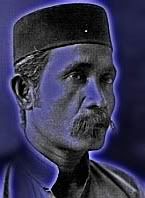
Photos: Top: Pök Che Amat; Bottom: Wan Muhammad Dato' Perba.

Labels: , , , , , , , ,