Boomtime Hills
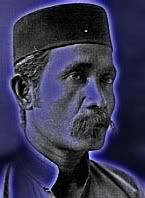
The genta that clanged at sunset to signal the breaking of the fast (iftar) during Ramadhan was once the amok alarm. I don't know if the people of Trengganu were amok prone, but the last amok in folk memory happened probably in the early years of the last century. He was known as Pök Mat Ngammok (Pak Mat the amok), who, after some unhappiness in his domestic life, went completely out of control. We were told, in bedtime stories in our childhood days, that he was shot and buried under the coconut trees by the shore, in a place called Tanjong Mengabang, which in our day, was also known as Ladang Batu Satu after the milestone before the bend in the road that took us to the Ladang of the two schools and the roundabout of the turtle.
The genta rang bells in many memories [see The Sound of Heavy Metal, below] especially as it is now puasa, the fasting month. But what's unsettled in my mind is the cannon that boomed from distant hills. We were shoreline people in Tanjong, ever looking out to sea and the Bukit Putri, and the hill did the same too, looking to the sails and flags of ships in the horizon that brought to us Admiral Cheng Ho (Zheng He). But that was a long time before the genta clanged or the cannon boomed on the hill. But which hill? Looking to the hinterland from the shore I always thought that it was Bukit Besar (Big Hill) that gave our bbuka time its flavour of the 1812 Overture. But Syafiq, so proud of his corner of town that he has spelt it out in capitals, a BUKIT BESAR BOY, [see Comments, below] puts the blame on neighbouring Bukit Kecik or Bukit Kecil (the Small Hill), whilst Karim Omar (whose 13-year old daughter writes a fine blog) says it's Bukit Pak Apil. Can anyone help us here?
I am grateful to Wangrohing for having found hasidöh's distant cousin in Ambon, in the Maluku (Moluccas) archipelago where the natives have been chomping on it since — perhaps — time immemorial. But the introduction of hasida kantang intrigues me, would that be like sweet, greasy mashed potatoes? But hasida is defined by Chaumont Devin, compiler of the Ambon Dictionary as “ a sweetmeat made of raw dough, sugar and spices”; that's hasidöh to the core. Speaking of Ambonese, these other hasidöh people remind me of Bachok, our agile coconut tree cutter of Tanjong Pantai. Bachok, from Celebes, to the West of the Moluccas archipelago, came adrift to our shore in his boat and stayed with us till the end of his days. How he must have longed for his faraway home, and when he saw our hasidöh did we see a hint of a tear in his eye?
For more hasidöh memories, please go to Comments, but afore ye go please remember that hasidöh the sweetmeat is not qasidah that sometimes wended its tuneful way on Radio Malaysia with its “Ya lail, ya lail, ya lail.....” (“O night, o night, o night...”) in the Songs of the Desert slot.
For the photo below I am grateful to Ajideol of Kolang who sent it with his caption to salute the youth of Pulau Wang Mang and in memory of Bachok, the great Sulawesi man who lived among us and our coconut trees. Thanks Ajidoel. Thanks everyone for your memories. Selamat Berpuasa!

Labels: Ambon, amok, Bachok, Bukit Besar, Bukit Kechil, Bukit Pak Apil, Bukit Putri, Celebes, hasidöh, qasidah
posted by Awang Goneng @ 5:40 pm
10 Comments