Singing for the Sultan
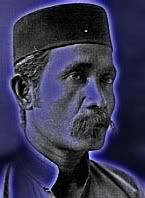
Cik Gu Muhammad Hashim bin Abu Bakar standing before the Istana Kolam in its glory days, leading a group of schoolchildren in the first performance of what was later to be the Trengganu state anthem before Sultan Sulaiman Badrul Alam Shah on his birthday [see, Music in the Rubble]. Some of the children, I am told, were from Sekolah Paya Bunga, a school that must have stood close to a pond with pretty flowers, but not in the days when Father was there. And I don’t think Father was among the young people who stayed back after school to do the solfeggio in preparation for the big song on the big day.
If as Peter Newmark* says, imagination has two main faculties: sonorisation and visualtion, then we’ve all been there and there. I’ve replayed in my head many times our hot mornings in Padang Paya Bunga (which is some distance away from the Sekolah), us parading schoolchildren, songkoks on heads and probably flags in hands, listening to speeches and more speeches and then singing. In sonorisation, says Newmark, you normally hear voices in your mind, of people dead and living, and you hear your own voice too. It's all part of memory.
My sonorised memory of those days on Padang Paya Bunga consists of some distinguished voices, of Buya Hamka, the Indonesian writer and religious scholar speaking and wiping tears as he narrated the story of what I now think was most certainly the Qasida Burda, the Poem of the Prophet’s Mantle. Father took us there one evening, and all I could hear were hypnotic words (Hamka was a formidable speaker) that I could not relate to any everyday thing, but I remember him saying selendang (a cloak, veil or scarf) as he wiped his eyes. There were many dignitaries who spoke there, and once we heard the voice of a lanky man with thick glasses who was known widely by his pen name of Misbaha, the distinguished amateur historian of Trengganu.
I began sonorising yesterday when a Trengganuspeaking friend sent me an email to say that he felt ssebök when he saw on television the installation ceremony of the Sultan of Trengganu as the thirteenth Yang di Pertaun Agong of Malaysia and the third Agong from Trengganu. Ssebök is the more evocative Trengganuspeak version of the standardspeak tersebak, that welling up of the emotion, that swelling in the chest and that tissue moment for the eye, in sadness or happiness or a mixture of both.
And of course I remember the state anthem of Trengganu, but only in my sonorised way that went, for a long time, like this:
"Allah peliharakang rajakang mi,That was probably how I (we) sang it on the Padang, and looking back now on that first line, how wonderfully alliterative it falls in its Tregganuspeaking way, what sonorous memory!
Memerintah Trengganu negeri...**
We were taught that at school, not from a song sheet, but from listening to the words as poured from the mouth of our teacher. Mine was in Sekolah Melayu Ladang, built on colonies of Cik Ru on sandy Ladang soil. Traffic went past our front gate, the red and yellow of the Trengganu Bus Company, the tarpaulin covered lorries of the Pahang Mail Transport Company, the Tok Peraih middlemen with their cone-shaped terendak hats cycling at speed from one fish market to another, with their trade mark fish baskets in the back-rack of their bicycles. Fish odour and diesel fumes and dust wafted into our grounds at playtime, and the occasional Arabic noises from the Madrasah Sultan Zainal Abidin next door. Walking home via the footpath through the village in the back of the school, we met the putrid smell of dried shrimps pounded, with sea salt and the sweat of labour, into grainy looking dark brown paste that now lay in slabs on the belacan racks that were put out to dry in the sun and air.
"Allah peliharakang rajakang mi..." how wonderfully apt the sound, how evocative the rhythm of Trengganu.
____________________
* Professor Peter Newmark, occasional lecturer in translation studies, University of Surrey, in The Linguist magazine, Feb/March 2007.
** Allah peliharakan Raja Kami, God save our King.
Labels: Hamka, Misbaha, Muhammad Hashim bin Abu Bakar, Peter Newmark, Sekolah melayu Ladang, Sekolah Paya Bunga
posted by Awang Goneng @ 11:18 am
6 Comments