Little Old Town
Walter William Skeat, an anthropologist who visited Kuala Trengganu in 1899, was impressed by Sultan Zainal Abidin III's urbane humour. From his library the Sultan produced Wood's Natural History to pick out 'some of the beasts we were discussing'. And then, looking out at Kuala Trengganu, Skeat said, it was 'a hive of industry'.
The capital was composed of many kampungs and the shops
“were well-supplied with bread, light beer, soda, cheroots and similar European wares, as well as with an extensive assortment of Malay goods and, above all, Chinese and Indian articles. The streets, except around the istana, were ill-kept and destitute of drains. Yet even here the local talent for craftsmanship showed itself clearly in the well-built bridges across the creeks. We also saw a few wooden lamp-posts, which must have been unique among the east coast states at the time of our visit.”Skeat would have seen Kuala Trengganu very much as it was seen below, in a photo taken nine years before his visit and published in the Illustrated London News.
.jpg "Kuala Trengganu, 1890") In 1846, during the reign of the illustrious Sultan Baginda Omar, an anonymous visitor gave a description of Kuala Trengganu that wasn't far removed from the photo that we see above. Looking from the river, the visitor said, the town of Tringanu
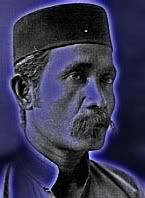
In 1846, during the reign of the illustrious Sultan Baginda Omar, an anonymous visitor gave a description of Kuala Trengganu that wasn't far removed from the photo that we see above. Looking from the river, the visitor said, the town of Tringanu “has a very pretty appearance...the houses line the south bank for a couple of miles and are built very close, on piles; in the back ground are two hillocks, on one of which the standard of Tringanu is hoisted on great occasions, and behind the hills is a forest of cocoanut trees; on the north bank there are a few isolated houses , built in groves of cocoanuts.”The Kuala Trengganu of the picture above was the Trengganu of Sultan Zainal Abidin III, and of Tok Ku Paloh, one of Trengganu's many scholar-saints. Hugh Cliffford, then British Resident in Pahang, met the man and was apprehensive about the rabble-rousing speeches that he directed at the natives. Tok Ku Paloh was, in other words, a totally unreasonable character who was dead against British rule. This 'saint', he said (and you can almost sense the sneer here), 'lives secluded in the retirement of a shady, sleep-steeped village.' He was 'powerful, magnetic...a little, shrivelled, glassy-headed man from out of whose deep-sunken eyes there glares a soul of a fanatic.'
Looking at the photo now, more than a hundred years later, I think I can still recognise the houses and the boats in the water, but is that really Bukit Putri in the background with what looks like the fortress above? Are we looking from Pantai Teluk, or is this a view form the river? What do you think?
Labels: Bukit Putri, Hugh Clifford, Kuala Trengganu gaol, Tok Ku Paloh, Tringanu, W.W.Skeat
posted by Awang Goneng @ 8:37 pm
12 Comments