14. How to...Ndér pöténg
In this day of our age, ndér pöténg could result from sunspot activity or an extreme condition that knocks men senseless and sans navigation via satellite. The combination of sounds in this phrase gives it adequate description, forward and backwards and confined in area but moving straight up and sideways. But ndér pöténg is truly a biped activity, a pedestrian's rather than a motorised excursion. No ndér can be said to be genuinely pöténg if the actor is driving a souped up Jeep.
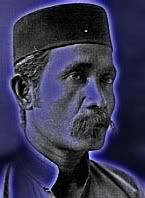
It’s anyone’s guess how the beginnings of ndér pöténg came about or when it turned into what it is now, i.e. an art. In the 19th century when Abdullah the Munshi came to Kuala Trengganu and looked in at Kampung Laut that was a stone’s throw from our Kampung Tanjong, he poked in his Singapura nose and sniffed at the men who were walking from one end of the market place and then turning back again once they got to the other side. These were days when stones were plentiful and men were not averse to throwing some in self-expression; and if context has to be placed in Dollah’s sniff it must be said that his derision was aimed at a rowdy band who were armed, well, to the teeth.
With covered drains and shopping malls there’s no better time than now to ndér pöténg. In urban streets you’ll have to be well prepared: with strong legs perhaps and proper shoes, and a strong voice to cuss the motorcyclists and urban authorities for not providing proper pavements for you to walk. In Trengganu you’d probably be able to get away with it in your kaing ssahang which is an all purpose rag that keeps your parts protected and out of the purview of the crowd. In the streets of Kuala Trengganu there were many ndér pöténgers so apparelled, going up and down the streets with no intent or purpose, moving hither and thither into lanes and crowds, and they were nearly all completely out of their heads. Which brings us to the first rule for the serious practitioners of the ndér pöténg art, and that is: it helps if you’re slightly mad.
The other is that you cannot have a purpose and ndér pöténg, and this applies to civilians as to the uniformed crowd. A man going round and round in an errand for his wife is not, for instance, a doer, nor is a policeman in plainclothes or in uniform if his movements are in the course of work, say to catch someone ndér pöténging in a prohibited place. And this raises a technical point: if, on arrest, a person is charged with doing it for a purpose, i.e. he is accused of loitering, say, with intent, then it could not later be argued in court that he or she was doing the ndér pöténg act. It is a rule well enshrined in — I think — the Trengganu Stone that whomsoever goes out for a walk whilst knowing where he was going to in the first place i.e. having an a priori aim, then his walk cannot be so construed as being in the nature of the act.
The mist of time has built a haze over the origins of this almost onomatopoeic phrase. Some say that the standardspeak mundar mandir [“Go up and down stream, move to and fro” — Winstedt’s Malay-English] may have been contracted in the first word ndér, and then pöténg does sound suspiciously like the standardspeak ponteng, to be AWOL.
Philology would have been better served if the Munshi had approached the band of Kampung Laut men to ascertain if this was the case, but they were all grinning oh so intently at him, and then there was also this matter of those arms that were stuck in their teeth...
Labels: Abdullah Munshi, Kampung Laut, Kampung Tanjong, mundar mandir, nder poteng
posted by Awang Goneng @ 3:11 pm
3 Comments