Growing Up In Trengganu #793, 616
Sometimes, late afternoon, we’d walk to the water's edge — ujong tanjong — and watch the dots in the horizon or the payangs coming in with the catch. There were barges bobbing up and down in the busy waters, the rivermouth that put the kuala in Kuala Trengganu. And Cik Jusoh the beachcomber walked past us with twigs and sticks in his hands, picked as they were washed on to the shore.
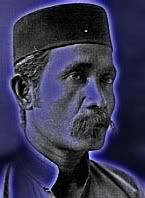
Cik Soh as we called him, was in mufti which was unlike the clothes that he wore to the mosque. In the former he had a coil of rag on his head and a tattered sarong around the waist, the kaing ssahang that Trengganu males hung on the nail stuck in the wall, or on the wire stretched taut across the verandah as an all-purpose clothes hanger. The ssahang was casual wear for days when we couldn’t be bothered with the sarong and shirt and the songkok at a jaunty angle. It was a one piece item of apparel that covered your parts from the navel down to just below the knee. The head piece was another rag, rolled like a snake of faded batik that coiled placidly over the brow.
In his foraging work Cik Soh struck an interesting pose, his trunk bent slightly forward, and his hands crossed at the wrists behind his back. In this manner he held two driftwoods or three in his hands that were kept away from his body or clothes because Cik Soh, in his eccentricity, had a clinical dread of the unclean parts of his body, like his feet, or the dust of common people. He kept himself to himself and parts of himself from himself, and rarely spoke to other people for fear of being touched. Standing now against the setting sun, with his hands pulled to his back, he was a big, dark praying-mantis silhouette figure.
The day’s end pushed our Tanjong people to the water, to earn their keep from the incoming payang boats or to sit and enjoy the buzz of work. Driftwood provided fuel for domestic fires and children threw sticks and dug holes and chased crabs that waved then bolted to their tiny holes as the waves came back, sending the kids back to the sandy mounds, zig-zagging between adults on their haunches, their sarongs loosened at the waist then pulled to the top. “Jjalang mmolek bila gi ppata,” they used to warn the freewheeling novitiates, “Tread carefully when you’re on the beach” for those burqaed squatting men (and sometimes women) were using the beach as one big toilet in the open air.
We’d find a safe place to sit when the light began to fade and sometimes we spoke to a woman who waved a hurricane lamp to a dot of light at sea. As if by magic the beam of light would twinkle back, and she’d wave again with a contented chuckle. Her husband was pilot on the ship that was coming into the kuala with trade from the godowns of Singapore. We had many men in Trengganu who wore their job descriptions with their names, one such that I can still remember is Pak Ali Pailét, but in this instance I’m not sure if it was he.
The beach was a blessing to us and a fear. On some nights when the moon pulled in the tides, our Tamil shopkeepers pulled their sarongs up to a decent level for them to wade in and rescue merchandise from the water. In his youth, Father said, he used to squeeze lime juice on his freshly shorn head to get the extra head-chilling oomph from the sea breeze blowing on-shore. We had heaps of twigs and the buah rengas coming in when the sea was rough, as the waves lapped in with a mighty roar. There were dead cows and lengths of rope and the gömök seed that we used for kör in children’s games, and long tendrils called rumput jjulok that had a pulpy core that we dipped in ink before shaping into pretty flowers. A crowd gathered one day in the back corner of the market to leer at a dead body that was washed into the teluk. And then a boat came adrift one day, blown by the monsoon winds from the distant shores of Sulawesi. With it came a mighty man we called Bachök who liked us and stayed to father a son called Mat who went to school with my brother. When, in his old age, Bachök expressed a wish to go back to the shore from where he blew into our midst, the hold of Kampung Tanjong was already so firm on him that he stayed on to be laid finally to rest in the earth of Kuala Trengganu.
The shore that Bachök came to is no more, washed out in bits and drabs into the sea by the changing flows and pulls of the water. Ujung Tanjong as we knew it is now submerged like some lost kingdoms under the sea, and sometimes I even wonder if people still do the squat on the sandy dunes of our pantai.
Labels: Bachok, Cik Jusoh, Kampung Tanjong, Pak Ali Pailet, Ujung Tanjong
posted by Awang Goneng @ 10:50 am
4 Comments