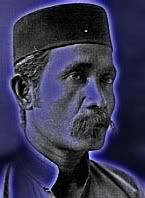
Man of Röjök
At the water's edge, by the long pathway of concrete that jutted into the harbour, was the kitchen of Pök Déh under a canopy of corrugated metal sheets. Pök Déh clanged on the metal kuali with his metal stirrer, and through the fire and smoke came the throat-tickling aroma of chilli in the air, and tiny cubes of meat basting in coconut oil and browning shallots.
Klang-klang-klang! Pök Déh would call the customers on his kuali, worn at the edges by his constant beats and coated with the flavours of dishes that came together in the heat, embedded in layers of oil in the kuali, of flavours fossilised from dishes past.
There was art in the kuali of Pök Déh; first a sweep of water over the greasy crust, then, as it vapourised over the charcoal heat, a dose of oil followed, just when the heat was right, by squid or meat and some concoction from a clay pot that raised the steam and – wait for it – the sizzling noise of the combined ingredients as they hissed their voices out in applause, the ddesèr of the kuali as we say it in Trengganuspeak.
There was little that I knew of the private life of Pök Déh or Abdul Kadir as he was named in his land of birth. He did not appear among the Tanjong Mappalaikuppam crowd, nor at the canteen for diaspora Tamils run by our Pök Kör (Abu Bakar) in their Tanjong hub, but Pök Déh appeared without fail when the noon-day sun rose above the head, to prop the shutters up around his röjök stall and dust the seats and klang his kuali to the delight of his discerning crowd.
He drew his customers from the General Post Office that stood at the foot of the hill, and from the Department of Customs and Excise, and the boatmen who rowed their boats into the water before letting them go on wind-power as their sails unfurled their full patchwork of flour bags. This same wind also blew Pök Déh's flavoursome smells into the nostrils of wayfarers and the passing trade who stopped, if only for the breathtakingly sweet tèh tarék.
Pök Déh was master of the flagship dish of his people, the Mee Mamak, of noodles fried in spices and seafood or meat to the accompaniment of much ritualistic clanging of the kuali to bring out the flavours that soon dispersed into a cloud that stung the eyes as to make adults weep. True Mee Mamak is only slightly moist, sometimes embellished with hints of tiny bits of nuts, and eaten in a ha-ha chorus, not in laughter but in an appreciative sigh because the chilli was very hot. In Trengganu we were both mee and röjök people, and the jurymen had decided that our Pök Déh was for us in Kuala Trengganu, Pök Déh Röjök.
Röjök was a delicate operation that Pök Déh executed with alacrity and no small measure of delight. This was basically a chopping operation (with his heavy cleaver) of pre-cooked ingredients of cow's lung and, tofu (fried) and cucumber and a root called sengkuang (jicama; yam bean; Pachyrhizus erosus ) that gave the röjök a crunchiness that was a change from the sponginess of the fried lung and the bready taste of the fried floury blobs. Dah-dah-dah-datt... went the woodpecker noise of Pok Deh's cleaver over the cutting slab, and then the heap, all sliced, is pushed into a plate before Pök Déh dunked a heap of noodles in a wire-mesh dunker into the cauldron of boiling water. When the noodles and the chopped up röjök articles laid in a promiscuous mix in a deep plate, Pök Déh pulled open the lid of another pot bubbling quietly over the fire; and with an artistic sweep he brought the kuöh (sauce) in a ladle onto the heap.
People who know will tell you that it was the kuöh that made Pök Déh's röjök, and there are many now walking about who will give up their favourite TV programmes to be able to go back to that shed where Pök Déh klanged into the night and made that delightful noise that woodpeckers made.
posted by Awang Goneng @ 2:51 pm
5 Comments