9. How To...Jjuweng
Jjuweng is best understood when it’s not. Dök jjuweng is a sad state when two souls don’t meet and are even at odds. Jjuweng may look almost similar to jjuweh but isn't, though jjuweh with lips pouting, may indicate displeasure as a result of not being in jjuweng with someone else. But jjuweh generally is a sign of someone doing something in earnest, lips shaped into a pout while carving a piece of driftwood into a spear to throw at someone with whom he is dök jjuweng i.e. in disagreement or just not compatible with. Admittedly, spear throwing may be an extreme way to state your disapproval of someone whose path other people, similarly disposed, may just avoid, but such is the caprice of people who’re at odds that they sometimes wish their opponents dead.
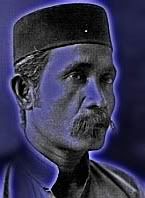
The origin of jjuweng has been lost in antiquity, though there are many who believe that antiquity may have begun in the 1800s, when topi-headed British lads came down to Trengganu and urged the local chieftains to “come join hands” in their empire-building work. Those who preferred to hurl spears at the topis were jotted down in colonial records as refuseniks to this invitation to ‘join’, an expression that slid into the Malay language as tidak join and later into the vernacular as dök join, then, dök jjuweng as an expression of incompatibility as the topi was to a long cloth wrapped around the head.
In daily life where there’s restraint about fisticuffs, people who are said to be dök jjuweng give each other a wide berth. In extreme cases, where they meet and wish to exchange words, the one speaks to the other through the intermediary of a neutral third, even if the gap between the first and second unjjuweng person is only a yard. Jjuweng is commonly stated in the negative as dök jjuweng probably because of the presumed provenance of the word, as to be a refusenik vis-a-vis the topis would’ve afforded some social cachet in the village. It’s more prestigious to be dök jjuweng than jjuweng so to speak.
It is better, by and large, to be jjuweng than dök, and the position in between will take you down another road: dok jjawa (standardspeak, duduk berjawa), the path of the undecided. Now, I shall not speculate as to how we’ve wandered from jjuweng, which came to us presumably from Old French via English, to Jawa, which is a place down the Straits, but such is the convoluted way of the argot.
posted by Awang Goneng @ 12:01 pm
4 Comments