Selamat Hari Raya

Come Raya morning, chaos rules. It is the same today in our household: time is flying fast and there is no sign of that button for the baju, and the shirt's unironed, oh woe is me.
And then I hear the genta, long clanging sounds from far away, atop the hill, and Raya resonates down to us down below, through closed shops and houses in Kuala Trengganu. Children half awake from a full night of weaving and running in the dark and looking at faces lit up in the yellow light of Chinese lanterns that fold up like bellows but are now stretched to their full length by the weight of candles.
There are ships among houses, no, not sailing ones, but close, too close to the stairs of the house of Pok Wè or Wang Semail, and other people who have money to take to the shops for crepe paper and glossy sheets in bright colours. Bamboos split into uprights and longer ones, joined together in horizontals, curved in the bow and papered over to be ship shape. We have seen them coming in, navigating the narrow neck of Ujung Tanjung and Seberang Takir across the water, the Hong Ho and the Rawang full of goods from Singapore. Now we have them made up from bright paper made bright by the lights of flickering kerosene lamps, in the front yard of some houses, trailing from mast to stern with twirled crepe of pastel colours, and perhaps a flag up there, no, not of Trengganu, but an unwashed kain lepas – a long sheet of workman's shoulder rag – to flutter into the winds the news that it is the night of Hari Raya.
We are tired now but the day's fresh as the dew, and hearken now to the sounds of Bilal Deramang and his companion Bilal Sa'id in two voices, one sonorous the other gruff, oh how beautiful and sad, the tugging in the heart sounds of the Takbir! And klaaang! and klaang! go the genta, an old bell on Bukit Puteri. The maidens living up there in the mist of legends must have been klaaanged from their slumber.
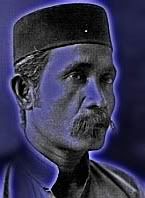
Now Father's looking smart with the apex of his handkerchief sticking out from the little pocket on the left breast of his baju, a place where the folded handkerchief with the bunga rampai potpourri sticks out in full aroma on wedding days, but Hari Raya isn't a potpourri day. Today it reeks of attar that came back with pilgrims from Makkah; his middle is wrapped in not quite the finest, but a good enough songket of Trengganu, bought from the shop of his friend Ustaz Su. And he wears his well-creased trousers to match the shirt, and that is the signal for us all. We are now ready to go.
Hari Raya is always a problem for me as I have trouble keeping the sampin tightly wrapped in the middle. It slides down the slippery trousers of some silky material, bought from the shop of our Tamil friend Abdul Hameed, and when the middle wrap starts to slide down, it needs to be readjusted and re-folded, and then twirled into a holding belt in the middle. It will be a great embarrassment if it comes down to rest on the floor around the shimmering trouser legs in the Masjid Abidin in the middle of prayers.
Around the Masjid, under the henna tree and the entrances towards Kampung Daik and another near the row of taps opposite the Lay Sing photo Studio are already teeming with people. Ku Haji Ambak and his sons in Middle Eastern garb, the paterfamilias with a round hat that seems to have been woven from some exotic straw, and their long robes brushing against other people in more familiar bajus tucked into the middle songkets glinting in the morning air. What a merry feast of Trengganu colours.
I always have my eyes at this time on the magnificent house that stands outside the mosque for that's our stop after prayers. There will be men handing out coins to children at the gate of the mosque and we'll be handed ten cents if we're lucky, but in the house of our uncle Ayah Pa and his wife Che Da (it's her family house actually) there'll be beleda with a crusty coat of sugar in the plate and ketupat to dip in peanut sauce and probably a cake laid out on a tray, made by a company called Big Sister, and there'll be buah ulu and laksam and maybe some nasi dagang too with the coconuty meat of the ikang aya (tuna).
The shops are closed but the mood is high. Adults exchange greetings and pleas for forgiveness for transgressions during the year, and the day's just about to start and it will end with us all bloated in the chair. There is a good view of the mosque from our uncle's upraised house, into the compound where the bilal will probably be seen in conversation with the imam, where people who are mosque regulars are still walking here and there. And there, outside the front mihrab tip of the mosque are the long stone pillars standing in rows, memorials to the royal family's deceased members.
The middle wrap of some fancy cloth is abandoned now and hands are dipping into the lower pockets of the Malay baju now jangling with coins and rustling perhaps with a dollar note or two. The lights are now fading into asar, time for the afternoon prayer, and we will soon be imbued in deep melancholy – of songs that endlessly sing the Hari Raya, of sounds that are gone but still droning from afar, lilting back and forth in memory, and lights and colours here and there.
As I sit here now thinking of that I see Mother now after her days of preparation in the kitchen, her face smiling, not basking in the joy of herself, but in vicarious pleasure from the enjoyment of seeing her children on Hari Raya.
Our beloved and departed family members, may Allah bless them all.
And I wish you all, my dear readers, a happy and blessed Eid ul Fitri.
Labels: Ayah Pa, Che Da, Hari Raya, Masjid Abidin, Mother
posted by Awang Goneng @ 5:04 pm
13 Comments