Ways of Seeing
History is fascinating because in its reflection not only does it portray itself but also the figure of the observer. It is this central self that interprets its happiness and grief and the myriad colours, and as often as not the meaning that is drawn from this experience can be both ideological and — I shall be the first to admit — highly personal. But the point of history is that central terrain of events and people in that ghostly past, awaiting and eager to be summoned to face us all in our present state — whatever state — of reality. It is this that makes history so daunting and worthwhile.
After my blog Man of Ood, fellow blogger Abidin offered this interesting comment: ”But the 1928 rebellion represented a conflict between tradition and modernity, not coloniser and colonised.”
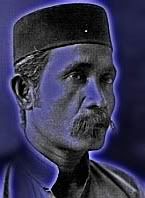
Yes indeed, tradition and modernity have clashed many times even in Trengganu. It was the Sultan Zainal Abidin III I am told, who stopped the encroaching railway on its tracks because, he argued, it would take the state into decadence and well, even if he didn’t use the word, ‘modernity’. And from here more images of men: the quest for modernity and its opponents on the other side. And then again in Ulu Trengganu, the peasants on the one hand, troubled by tax for the use of land, and the rulers (urged on by the Brits) who had to push on or sidle to the wayside. In the case of Sultan Muhammad it was exile in Singapore; in the case of Haji Abdul Rahman Limbong, Singapore and then Makkah. In a more extreme case, in Perak, it was exile to the Seychelles.
Who were these people? Just stick-in-the-mud anti modernisers who took up their cudgels against the Brits and no more? To accept that would give colonialism a high and mighty horse to ride over ‘backward’ people and then demean the names of Bahaman, Tok Peramu, Tok Gajah and his son Mat Kilau and more, they were traditionalists all but in their hearts they were also united by their hatred of foreign rule. When Pahang ‘rebels’ were driven out of their native state in 1894, they — Mat Kilau and Datok Bahaman — fled to Trengganu where they were sheltered by another Trengganu anti-colonial stalwart, Tok Ku Paloh. Earlier, in 1831, when another Malay state, Patani, was attacked by another outside power, Siam, both Kelantan and Trengganu went to its aid but unsuccessfully, and Trengganu, under great pressure, had to suffer the humiliation of having to hand over some of its best warriors to Siam, the victor. They were Panglima Ahmad, Panglima Demit, Panglima Mahmud and Panglima Pe’ee.
These revolts could have been moved by political events, or social processes could have pushed them to the boil, but, as my historian friend Dr Shahril Talib noted in his book ‘After Its Own Image: The Trengganu Experience 1881-1941’:
“[I]n recent years, several scholars have attempted to show some similarities and differences among these revolts. The prevailing observations were that all these revolts were anti-colonial and all, except the Trengganu case, were led by members of the ruling class. It was pointed out that the Trengganu revolt was led by religious leaders.”
Labels: Anti-colonialism, History
posted by Awang Goneng @ 2:12 pm
3 Comments